A beautiful holiday greeting card can end up in the trash or on someone's mantel for weeks. One of the biggest factors that makes the difference? The font. Choosing the right script or handwritten font sets the emotional tone before someone even reads the words inside. It can make a card feel warm and personal or cold and forgettable. If you're designing cards this season, picking the best script and handwritten fonts for holiday greeting cards is one of the most important creative decisions you'll make.
What exactly are script and handwritten fonts?
Script fonts mimic cursive or calligraphic writing. They have connected or flowing letterforms that give a sense of elegance and tradition. Think of them as the font equivalent of a pen gliding across paper.
Handwritten fonts look more like actual pen, pencil, or marker writing. They tend to be looser, less polished, and more casual. These fonts feel personal like someone sat down and wrote a note just for you.
Both categories work beautifully on holiday cards, but they serve different moods. Script fonts lean formal and classic. Handwritten fonts feel cozy and approachable. Many designers combine the two for a balanced look, which you can explore further in this breakdown of pairing elegant script with casual handwritten fonts.
Why does font choice matter so much for holiday cards?
Holiday cards are emotional by nature. People send them to say "I'm thinking of you." The font carries that message visually before the words do. A formal serif font might feel corporate. A playful handwritten font might feel too casual for a religious Christmas card. Getting the tone right builds connection.
Font choice also affects readability. Decorative script fonts with ornate swashes can look gorgeous at large sizes but become nearly impossible to read at smaller sizes. This is a common problem when people choose fonts based only on how they look in a headline preview without testing them at body-text size.
What are the best script fonts for holiday greeting cards?
Here are script fonts that consistently work well for holiday card designs, ranging from elegant to festive:
- Great Vibes A flowing, classic script with elegant swashes. It works beautifully for formal holiday cards and wedding-style Christmas invitations.
- Playlist Script A bold, modern calligraphy script with a hand-lettered feel. It's great for cards with a contemporary or minimalist aesthetic.
- Allura A refined, slightly condensed script font that reads well even at smaller sizes. Good for card interiors and envelope addressing.
- Alex Brush A delicate, high-contrast script with thin strokes. It gives a sophisticated look but needs a dark background or bold color to stay legible.
- Lavender Script A decorative script with generous loops and a romantic feel, perfect for heartfelt holiday messages.
- Christmas Magic A themed script font with festive flair, designed specifically with holiday use in mind.
What are the best handwritten fonts for holiday greeting cards?
Handwritten fonts add warmth and personality. These stand out for holiday projects:
- Caveat A casual, relaxed handwriting font. It works well for friendly, informal holiday notes and works especially well on rustic or nature-themed cards.
- Kalam Inspired by handwriting with a felt-tip pen. It has a warm, human quality that suits family-oriented holiday messages.
- Homemade Apple A detailed, realistic handwriting font that looks like someone wrote in cursive with a fine pen. Great for personal messages inside cards.
- Patrick Hand A clean, legible handwriting font that's easy to read at almost any size. One of the most versatile options for card designers.
- Amatic SC A narrow, hand-drawn font with a quirky personality. It's a solid pick for playful or kid-friendly holiday designs.
- Shadows Into Light A light, bouncy handwriting font that adds a cheerful touch without being too whimsical.
If you want to see how these types of fonts work together on actual card designs, this collection of script and handwritten font pairings for Christmas cards gives real visual examples.
How do you pair script and handwritten fonts on one card?
The most common approach is to use a script font for the headline like "Merry Christmas" or "Happy Holidays" and a handwritten font for the supporting text, such as the personal message or secondary lines.
The key rules for pairing:
- Contrast weight, not style. Pair a bold script with a lighter handwritten font, or vice versa. Two fonts with similar weight will compete for attention.
- Match the mood. A formal script like Great Vibes doesn't pair well with a super casual handwritten font. Keep the emotional tone consistent.
- Limit yourself to two fonts. Three or more fonts on a single card almost always looks cluttered.
- Test at actual size. Always preview your font pairing at the size it will print. What looks balanced on a 27-inch screen may look cramped on a 5x7 card.
For a curated list of combinations that actually work, see this guide to the best font pairings for holiday greeting cards.
What common mistakes should you avoid?
- Using overly decorative script at small sizes. Ornate swashes and flourishes disappear or turn into ink blobs when printed small. Save the fancy scripts for headlines only.
- Ignoring letter spacing. Script fonts often need tracking adjustments. Some have letters that overlap too much, while others spread apart unevenly. Always tweak spacing.
- Picking a font that doesn't support your language. Many free script fonts have limited character sets. If your card includes special characters or accents, verify the font supports them before committing.
- Forgetting about print quality. Thin-stroke fonts like Alex Brush can break apart on lower-resolution home printers. Test print before sending to production.
- Choosing style over readability. A card that people can't read defeats its purpose. If the recipient has to squint, the font has failed.
Should you use free or paid fonts for holiday cards?
Free fonts can work well, especially Google Fonts options like Dancing Script and Satisfy. They're accessible, well-made, and often include broad character support.
Paid fonts typically offer more stylistic alternates, better kerning, and more polished design details. If you're creating cards for a business or selling card designs, a premium font can make a noticeable difference in quality.
Whatever you choose, always check the license. Some fonts are free for personal use only. Commercial use including selling printed cards usually requires a paid license.
How do you make script fonts more readable on cards?
A few practical adjustments go a long way:
- Increase the font size. If the script starts below 18pt, readability drops fast.
- Add a slight text shadow or outline to help thin strokes stand out against busy backgrounds.
- Use a solid or subtly textured background behind script text rather than placing it over complex illustrations.
- Choose fonts with more open letterforms. Fonts like Sacramento have wider openings that stay legible even at moderate sizes.
- Print a test copy. What looks fine on screen can be surprisingly hard to read on paper.
What fonts work best for different holiday card styles?
Different card designs call for different typographic moods:
- Classic Christmas cards: Traditional scripts like Snell Roundhand or Allura paired with a clean sans-serif.
- Rustic or farmhouse-style cards: Handwritten fonts like Kalam or Caveat with earthy tones and kraft paper textures.
- Modern minimalist cards: A single-weight script like Playlist Script with lots of white space.
- Kid-friendly or playful cards: Bouncy handwritten fonts like Amatic SC or Shadows Into Light in bright colors.
- Photo holiday cards: A clean handwritten font like Patrick Hand that won't compete with the photo.
What are the next steps for designing your holiday cards?
Start with the mood you want to set. Then choose your primary font the one that carries the headline or main greeting. Add a secondary font for supporting text only if needed. Test the pairing at print size, print a sample, and adjust spacing or weight until the text feels balanced and easy to read.
Before you finalize, run through this quick checklist:
- Is the main greeting legible at arm's length?
- Do the two fonts have enough contrast to feel distinct?
- Does the overall tone match the message you want to send formal, warm, playful, or festive?
- Have you checked the font license for your intended use?
- Did you test print on the actual card stock or paper you plan to use?
- Are the font sizes appropriate large enough to read, with the script reserved for display text?
Getting these details right means your holiday cards won't just look nice on screen they'll feel intentional and personal in someone's hands. That's the whole point of sending a card in the first place.
Try It Free Best Script and Handwritten Font Pairings for Christmas Cards
 Christmas Card Font Pairings: Calligraphy and Hand Lettering Combos
 Modern Script and Handwritten Font Combos for Festive Holiday Cards
 Cursive Script with Rustic Handwritten Font for Christmas Card Messages
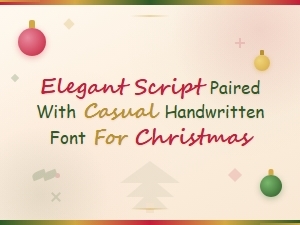 Elegant Script and Casual Handwritten Font Pairings for Christmas Designs
 How to Pair Contemporary Typefaces for Holiday Cards